The Must-Have Car Safety Features in Modern Cars
In the rapidly evolving world of automotive technology, safety innovations stand at the forefront of design priorities. Modern vehicles are not merely modes of transportation; they embody advanced systems engineered to protect passengers, pedestrians, and drivers under a myriad of conditions. Whether you’re a daily commuter navigating urban jungles or a weekend road-tripper chasing horizons, understanding these essential safety features can guide your next vehicle purchase and ensure peace of mind on the road.
1. Advanced Driver Assistance Systems (ADAS)
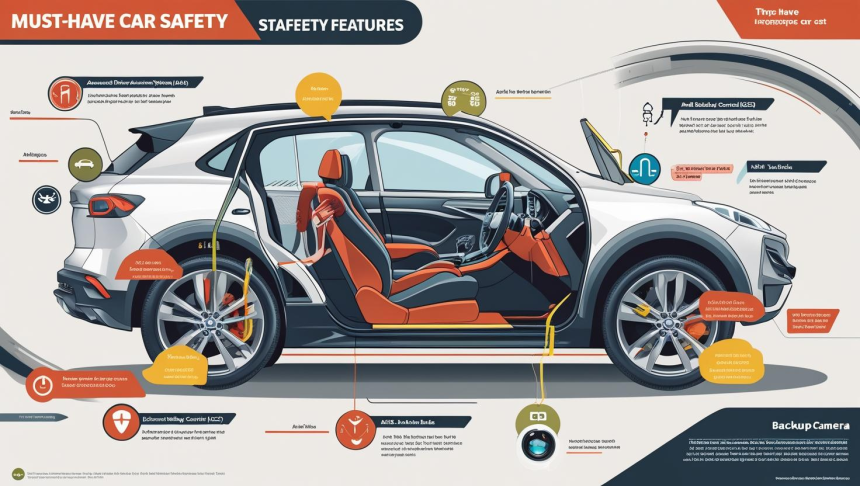
Advanced Driver Assistance Systems, commonly abbreviated as ADAS, encompass a suite of technologies designed to aid drivers in mitigating accidents and reducing human error. These systems rely on an array of sensors—cameras, radar, and lidar—to monitor the surrounding environment.
- Automatic Emergency Braking (AEB): Detects imminent collisions and applies brakes autonomously if the driver fails to respond in time.
- Lane Keeping Assist (LKA): Monitors lane markings and provides steering input to prevent accidental drifting.
- Adaptive Cruise Control (ACC): Adjusts vehicle speed to maintain a safe following distance from the car ahead.
- Blind Spot Detection (BSD): Alerts drivers to vehicles lurking in their blind spots during lane changes.
By integrating ADAS, modern cars transition from reactive to proactive guardians on the road.
2. Surround View Cameras and Parking Sensors
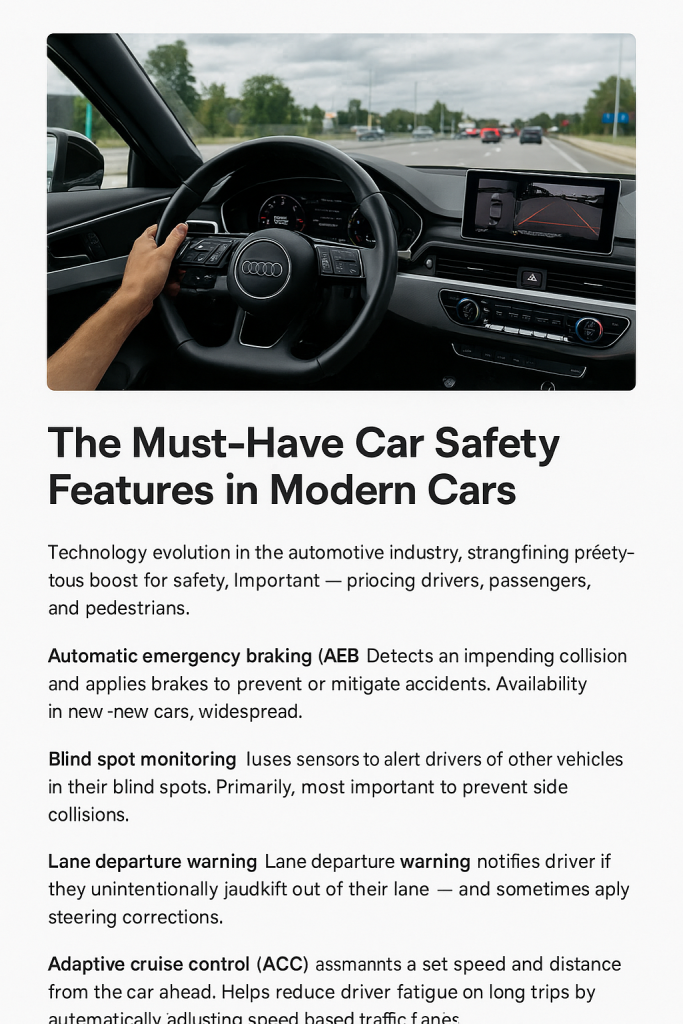
Maneuvering in tight spots has never been easier, thanks to surround view cameras and ultrasonic parking sensors. These systems grant drivers a virtual bird’s-eye perspective and audible cues, significantly reducing parking-related bumps and scrapes.
- 360-Degree Camera System: Stitches together feeds from multiple cameras to produce a comprehensive overhead view.
- Front and Rear Parking Sensors: Emit beeps of varying intensity as the car approaches obstacles, guiding drivers safely into spaces.
These features are particularly invaluable in crowded urban areas and for drivers of larger SUVs and trucks.
3. Airbag Evolution: From Side to Center
Airbags have been lifesavers for decades, but their technology has grown increasingly sophisticated.
- Side Curtain Airbags: Deploy during side impacts to shield occupants’ heads from intruding objects.
- Knee Airbags: Protect lower extremities from dashboard impact.
- Center Airbags: A relatively new innovation, these deploy between front seats to prevent side-impact collisions between driver and passenger.
A comprehensive airbag network addresses impacts from multiple directions, drastically enhancing occupant survival rates.
4. Electronic Stability Control (ESC) and Traction Control
Slippery roads and emergency maneuvers can pose significant threats to vehicle stability. ESC and traction control systems are the silent saviors in such scenarios.
- Electronic Stability Control: Monitors steering and yaw rate, selectively braking wheels and reducing engine power to help drivers maintain control during skids.
- Traction Control Systems: Prevents wheel spin during acceleration by adjusting engine torque or applying brakes.
These systems work behind the scenes, ensuring the car remains obedient to driver inputs, even in challenging conditions.
5. Tire Pressure Monitoring Systems (TPMS)
Under-inflated tires compromise handling, braking, and fuel efficiency. Tire Pressure Monitoring Systems offer real-time insights, alerting drivers when tire pressure falls below optimal levels.
- Direct TPMS: Uses sensors within each tire to measure pressure directly.
- Indirect TPMS: Infers pressure changes through wheel speed sensor data.
Prompt alerts from TPMS can prevent blowouts, improve fuel consumption, and extend tire lifespan.
6. Advanced Lighting: Adaptive and LED Headlights
Visibility is paramount for safety—both in seeing and being seen.
- Adaptive Headlights: Pivot with steering inputs to illuminate curves and corners dynamically.
- Automatic High Beams: Switch between high and low beams based on oncoming traffic detection.
- LED Headlights: Offer brighter, whiter light with lower power consumption and longer lifespan compared to traditional halogen bulbs.
These lighting technologies not only enhance nighttime visibility but also reduce driver fatigue on long trips.
7. Pedestrian Detection and Collision Mitigation
Modern safety isn’t solely about protecting vehicle occupants; it extends to vulnerable road users.
- Pedestrian Detection Systems: Use cameras and radar to identify pedestrians, automatically applying brakes if a collision risk is detected.
- Cyclist Detection: Some vehicles now include specialized algorithms to recognize cyclists, offering similar collision avoidance interventions.
By broadening the protective umbrella beyond occupants, these features underscore a holistic approach to road safety.
8. Driver Monitoring and Drowsiness Detection
Driver fatigue is a silent threat on highways. Drowsiness detection systems, equipped with inward-facing cameras or sensor-based steering input analysis, monitor driver alertness.
- In-Cabin Cameras: Observe eye movement and head positioning to detect signs of fatigue or distraction.
- Steering Pattern Analysis: Identifies irregular steering corrections indicative of drowsiness.
Timely warnings prompt drivers to take breaks, reducing fatigue-related accident risks.
9. Over-the-Air (OTA) Updates and Cybersecurity
As cars become connected devices, software integrity and security demand attention.
- Over-the-Air Updates: Ensure safety system software remains current without dealership visits.
- Cybersecurity Measures: Protect against unauthorized access and potential remote hijacking of vehicle controls.
A robust digital framework preserves the reliability of safety features in an increasingly connected automotive landscape.
Conclusion
The synergy of these advanced safety features marks a new era in automotive design, transforming cars into intelligent protectors. When shopping for your next vehicle, weigh these technologies against your driving habits, environment, and budget. After all, investing in safety is investing in life—both yours and others’ on the road.
As cars continue their evolution, staying informed about emerging safety innovations will empower you to make savvy purchases and navigate roads with renewed confidence.
Want to dive deeper? Explore our comparison of top ADAS suites across leading brands, or check out our primer on the future of automotive cybersecurity.